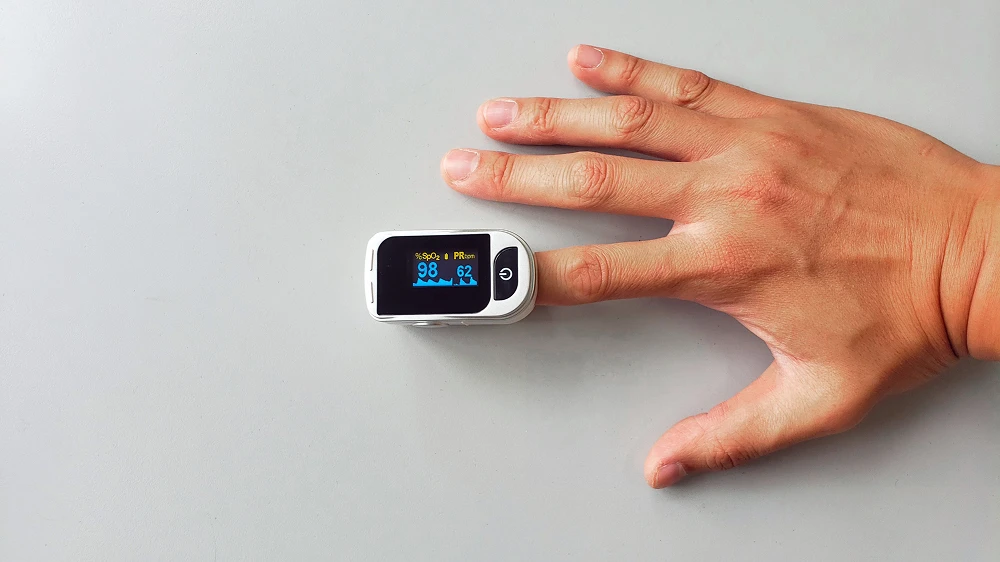
Why We Ask About Your Heart Rate
GLP-1 medications (such as semaglutide and tirzepatide) can raise resting heart rate slightly, on average by about 2 to 3 beats per minute. Some people notice little to no change, while others may have a larger response. Because of this, we ask you to check and share your heart rate at the start of your care. This gives your care team a personal baseline to compare against as your treatment continues, so we can support you safely and make adjustments if needed.
How to Measure Your Heart Rate
You can check your heart rate using your fingers (a manual pulse check) or a device such as a smartwatch or fingertip pulse oximeter. The steps below are for a manual check, which only takes about a minute.
- Sit down and rest quietly for 5 minutes before checking. Avoid caffeine, exercise, or nicotine for at least 30 minutes beforehand.
- Find your pulse at your wrist (radial pulse): turn one palm face up and place two fingers (index and middle, not your thumb) on the inside of the opposite wrist, below the base of the thumb.
- Alternatively, find your pulse at your neck (carotid pulse): place two fingers gently on the side of your neck, just beside your windpipe, below your jaw.
- Once you feel a steady beat, count the number of beats for 30 seconds using a clock or timer, then multiply by 2. Or count for a full 60 seconds for extra accuracy.
- Record the number, along with the date and time, and enter it in your Onsera app or share it with your care team.
Tips for an Accurate Reading
Keep these in mind
- Measure at the same time of day and while seated for consistent, comparable readings.
- Press gently. Pressing too hard on your wrist or neck can make the pulse harder to find or feel irregular.
- If you use a smartwatch or fitness tracker, a resting heart rate reading (not an active or exercise reading) is what we want.
- A normal resting heart rate for most adults is 60 to 100 beats per minute, but your personal baseline may differ.
When to Contact Your Care Team
Reach out to your Onsera care team if you notice any of the following:
Contact your care team if:
- Your resting heart rate is consistently above 100 beats per minute, or well above your usual baseline.
- You feel your heart racing, pounding, or beating irregularly, especially at rest.
- You experience dizziness, lightheadedness, chest discomfort, or shortness of breath along with a fast or irregular heartbeat.
Seek Emergency Care
If you have chest pain, fainting, or severe shortness of breath, call 911 or go to your nearest emergency room right away.
This sheet is for general education and does not replace guidance from your Onsera care team. Questions? Message your care team through the Onsera app.