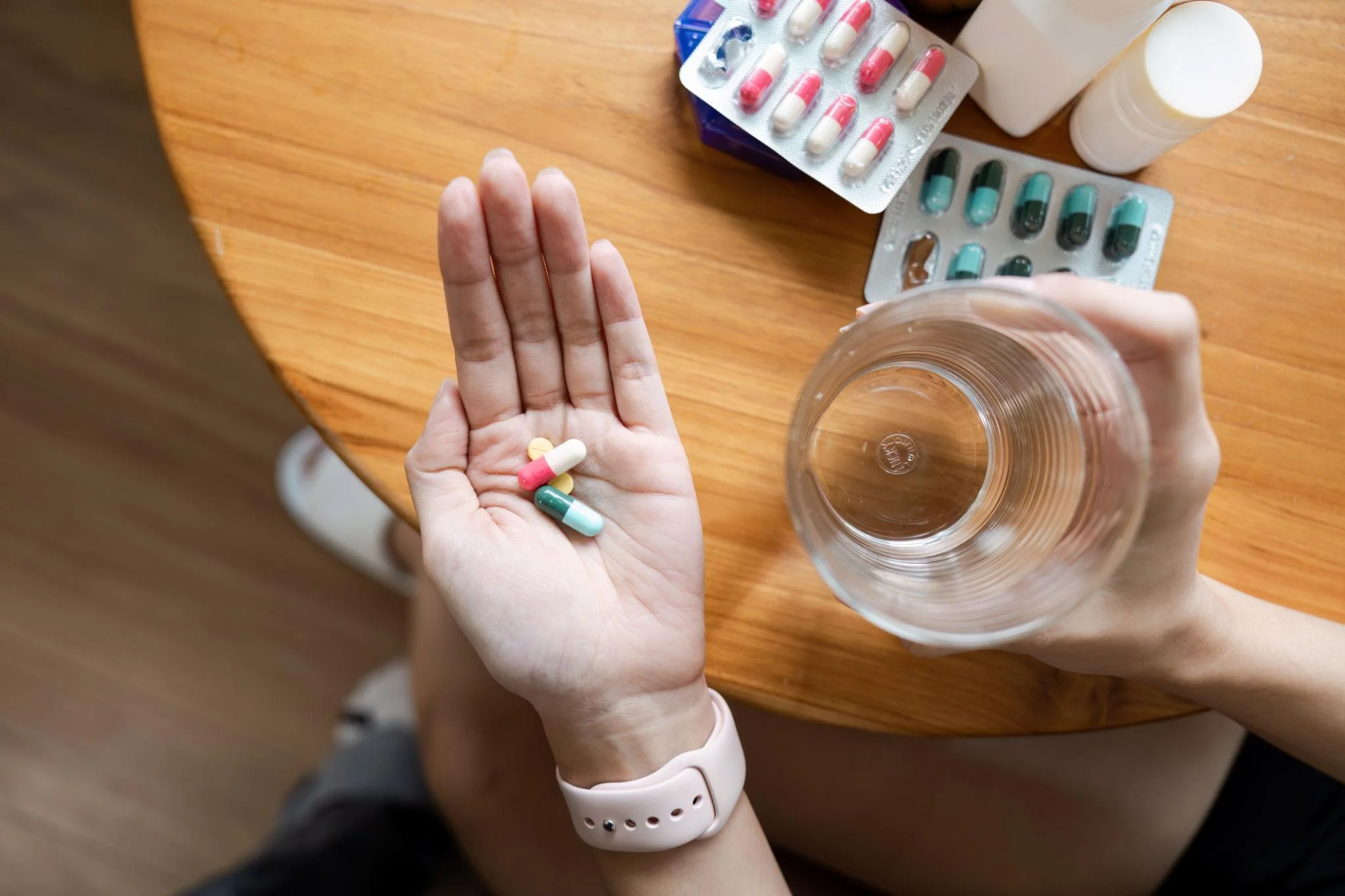
GLP-1 medications help control your blood sugar and support weight loss. Some you may know are Ozempic ® (semaglutide), Wegovy ® (semaglutide), Rybelsus ® (semaglutide), Mounjaro ® (tirzepatide), Zepbound ® (tirzepatide), and Foundayo ® (orforglipron).
These medicines work in part by slowing down how fast your stomach empties food. Because of this, they can interact with other medications and supplements in ways that are manageable — but important to know. This guide helps you understand what to watch for and how to work with your care team.
💡Tell your doctor about every medicine, vitamin, and supplement you take — and bring your list to each visit.
How GLP-1 Medications Interact With Other Drugs
GLP-1 medications interact with other medications primarily in three main ways:
| How it Works |
What It Means For You |
|
They slow down your stomach (slowed gastric emptying)
GLP-1s slow the movement of food and oral medications through the stomach, which can affect how quickly and completely some pills are absorbed.
|
Pills you swallow may work slower or may not work as well. Take your other pills at the times your doctor tells you.
|
|
They lower your blood sugar (Blood sugar-lowering effects)
When combined with other medicines that lower blood sugar, the combined effect can lower blood sugar more than intended.
|
If you also take diabetes medicine, your sugar may drop too low. Watch for feeling shaky, sweaty, or dizzy.
|
|
They can upset your stomach.
GLP-1 medications can cause nausea, vomiting, or loose stools — especially when you first start or increase your dose.
|
You can lose water and important salts (electrolytes). Some pills may not stay in your system long enough to be fully absorbed. Drink plenty of fluids and tell your Onsera care team if your symptoms are severe or don't improve.
|
Most medicine interactions can be handled by watching symptoms and adjusting the dose of either your GLP-1 or your other medication, as your health care provider recommends. They are usually not a reason to stop or avoid your non-GLP-1 medication. Always share a full list of your medicines, vitamins, and supplements with your Onsera care team.
Medications that Need Special Attention
Diabetes Medications — Highest Priority
| Medication |
Caution / What to Know |
What to Do |
|
Insulin
|
Combined use significantly increases the risk of hypoglycemia (low blood sugar).
|
Your insulin dose will likely need to be reduced when starting a GLP-1. Do not adjust insulin on your own — your provider will guide this. In the meanwhile stop your GLP-1 medication. Watch for signs of low blood sugar: shakiness, sweating, dizziness, or confusion.
|
|
Sulfonylureas
(such as glipizide, glimepiride)
|
These medications stimulate insulin release regardless of blood sugar level. Combining them with a GLP-1 increases the risk of hypoglycemia.
|
A dose reduction of the sulfonylurea is often needed. Monitor your blood sugar closely and report any symptoms of low blood sugar to your provider. Stop taking GLP-1 medicine and inform your provider right away if you do experience hypoglycemia.
|
|
Metformin
|
Usually safe. No significant interaction with GLP-1 medications; they are often used together intentionally.
|
These medicines are usually safe to take together. Some people may have more stomach upset, nausea, or diarrhea when taking both medicines.
Tell your provider if GI symptoms are bothersome. If side effects are bothersome, you may stop metformin right away — it does not need to be weaned off. Inform your provider right away if you stop it.
|
|
SGLT2 pills
(Such as: Empagliflozin/Jardiance, Dapagliflozin/Farxiga, Canagliflozin/Invokana)
|
Generally safe in combination and may enhance weight and blood sugar benefits. However, eating very little while on both medications can rarely cause a serious acid buildup called diabetic ketoacidosis (DKA). Both medication classes can also reduce fluid in your body.
|
Drink plenty of fluids. Do not skip meals. Call your doctor right away if you have abdominal pain, repeated vomiting, or trouble breathing — these can be signs of DKA.
Important: SGLT2 inhibitors provide strong protection for your heart and kidneys. As long as you are not having serious side effects from the combination, do not stop your SGLT2 inhibitor without discussing it with your provider.
|
Blood Pressure Medications
As you lose weight on a GLP-1 medication, your blood pressure often improves — sometimes significantly. GLP-1 medications can also lower blood pressure on their own through effects on your kidneys and blood vessels. Blood pressure medications that were previously necessary may become too strong and need to be adjusted. Always discuss with your doctor before making changes to how you take your medications.
| Medication |
Cautions(Interaction) |
What to Do |
|
Diuretics (water pills)
(such as hydrochlorothiazide/HCTZ, furosemide, spironolactone)
|
GLP-1 side effects like nausea, vomiting, or diarrhea can cause you to lose fluids. Combined with a water pill, this raises the risk of dehydration, low blood pressure, and kidney strain. Weight loss may also lower your blood pressure further, making the current dose too strong.
|
Drink plenty of fluids. Tell your provider if vomiting or diarrhea is persistent or lasts more than a day. Your provider may check your kidney blood tests. Monitor your blood pressure at home and report dizziness or lightheadedness.
|
|
ACE inhibitors and ARBs
(such as lisinopril, losartan, valsartan)
|
Dehydration from GLP-1 side effects can cause your blood pressure to drop too low and may affect your kidneys when combined with these medications.
|
Stay well hydrated. Stand up slowly if you feel lightheaded. Your doctor may check kidney blood tests.
|
|
All blood pressure pills
|
As you lose weight, your blood pressure may get lower. Your current dose may become too strong, causing dizziness or lightheadedness.
|
Check your blood pressure regularly at home. Your provider may lower your dose over time.
Needing less blood pressure medicine is a sign of progress — but do not stop or change any blood pressure medication on your own. Always discuss changes with your provider.
|
Thyroid Medications
| Medication |
Caution(Interaction) |
What to Do |
|
Levothyroxine
(Synthroid, Levoxyl, Tirosint)
|
GLP-1 medications slow stomach emptying, which may reduce how well levothyroxine is absorbed. In addition, as you lose weight, your body may need a lower dose of thyroid medication. Both of these factors can cause your thyroid levels to shift.
|
Take your thyroid medication on an empty stomach at the same time each day, 30–60 minutes before eating food or taking other medicines. Tell your thyroid provider you are taking GLP-1 medicine. Your provider may check your thyroid levels after you start or change your GLP-1 dose.
If your thyroid provider is not already aware of your weight loss, notify them after every 10 lbs of weight loss. Your levothyroxine dose may need to be lowered as you lose weight.
|
Oral Contraceptives
| Medication |
Caution(Interaction) |
What to Do |
|
Oral Birth Control Pills (combined estrogen/progestin pills)
|
Slowed gastric emptying may reduce how well the pill is absorbed, especially when first starting GLP-1 medication or after a dose increase.
This effect is greatest with tirzepatide (Mounjaro/Zepbound). If you have vomiting or diarrhea, the pill may not stay in your system long enough to be fully absorbed. GLP-1 medications may also improve ovulation, which can increase your chance of becoming pregnant.
|
Use a backup birth control method (such as condoms) for 4 weeks after starting your GLP-1 medication and for 4 weeks after each dose increase. If vomiting or diarrhea lasts more than a day, use backup contraception until your next pill cycle. Ask your provider about non-oral options (patch, ring, IUD, implant) that are not affected by stomach emptying
|
Blood Thinners
| Medication |
Caution |
What to Do |
|
Warfarin (Coumadin)
|
GLP-1 medications do not directly change how warfarin works in your body. However, changes in your appetite, diet, and vitamin K intake while on a GLP-1 medication can cause your INR (blood-thinning level) to become less stable. Vomiting or diarrhea can also affect your INR.
|
Have your INR checked more often when starting a GLP-1 medication or changing the dose. Tell your anticoagulation provider that you are taking a GLP-1 medication. Report any episodes of poor eating, vomiting, or diarrhea, as these can shift your INR.
|
|
Direct oral anticoagulants (DOACs)
(Apixaban/Eliquis, Rivaroxaban/Xarelto, Dabigatran/Pradaxa)
Other blood thinners (like Eliquis, Xarelto)
|
No significant known interaction with GLP-1 medication, however vomiting and diarrhea could affect absorption, and missed doses of these medications can put you at serious risk for complications, including stroke or blood clots.
|
Do not skip doses. If you are vomiting and cannot keep your medication down, contact your prescribing provider right away. Do not stop taking your blood thinner without talking to your provider.
|
Medications With Narrow Therapeutic Windows
Some medicines must stay in a very precise range in your blood to be safe and effective. Too little and they do not work. Too much and they can be harmful.
GLP-1 medications can affect how these drugs are absorbed due to slower stomach emptying. Vomiting, diarrhea, or changes in hydration can also shift your levels. Warfarin and thyroid medications (discussed above) also fall into this category.
| Medication |
Caution |
What to Do |
|
Transplant medications
(cyclosporine, tacrolimus)
|
Slower stomach emptying may change how much of these medications your body absorbs. These medications require very precise blood levels to prevent organ rejection and avoid toxicity.
|
Do not skip doses. Inform your transplant team that you are taking a GLP-1 medication. Your transplant team may check your drug levels more frequently when starting or changing your GLP-1 dose. Do not stop your transplant medication without talking to your transplant team.
|
|
Anti-seizure medications
(phenytoin, lamotrigine, carbamazepine, valproate)
|
Blood levels of these medications can shift up or down. If levels drop too low, seizures may occur. These medications have a narrow therapeutic range and changes in absorption could affect their effectiveness.
|
Take your medication at the same time every day. Inform your neurologist that you are taking a GLP-1 medication. Your neurologist may check your blood levels when starting or changing your GLP-1 dose. Do not stop your seizure medication without talking to your neurologist.
|
|
Lithium
(for mood disorders)
|
Vomiting, diarrhea or dehydration can cause lithium levels to rise to dangerous levels. Over-hydrating can push lithium levels too low. Case reports have documented lithium toxicity after starting semaglutide.
|
Keep your fluid intake steady from day to day. Inform your psychiatrist that you are taking a GLP-1 medication. Have your lithium levels checked more frequently, especially if you experience vomiting or diarrhea. Call your provider right away if you feel shaky, very sleepy, confused, or sick to your stomach.
|
|
Digoxin
(for heart)
|
A slower stomach can change how much you take in. Too much is harmful.
|
Your doctor may check your digoxin level. Call your doctor right away if you experience nausea, vomiting, a slow or irregular heartbeat, or changes in vision.
|
Pain Medications & NSAIDs
| Medication |
Interaction |
What to Do |
|
Ibuprofen
(Advil/Motrin, naproxen/Aleve)
|
NSAIDs can irritate the stomach lining on their own. GLP-1 medications increase the risk of GERD and GI discomfort, so combining them may raise the chance of stomach pain, heartburn, or ulcers. If you are dehydrated from vomiting or diarrhea, NSAIDs can also affect your kidneys and blood pressure.
|
Use the lowest dose for the shortest time. Take with food. Drink adequate fluids. If you need to use NSAIDS regularly discuss with your Onsera care team.
|
|
Opioids
(oxycodone, hydrocodone, tramadol, codeine)
|
Both opioids and GLP-1 medications slow movement through the gut. Together, they can cause severe constipation, worsened nausea, and bloating. This combination requires close attention to your bowel habits.
|
Use only as prescribed. Drink plenty of fluids and eat fiber rich foods. Tell your provider right away if you can not have a bowel movement, or if you develop severe abdominal pain, bloating, or vomiting.
|
Supplements — What’s Helpful, What to Watch
Recommended Supplements on GLP-1 Medications
These supplements are commonly helpful and generally safe — but always talk to your care team before starting any new supplement. Leading nutrition and obesity medical organizations recommend that people taking GLP-1 medications consider supplements to replace nutrients that may be missed when eating less.
| Supplement |
Why It’s Useful |
Typical Dose |
|
Multivitamin
|
Helps fill nutritional gaps when you are eating less food.
|
One daily
|
|
Vitamin B12
|
Helps keep your blood and nerves healthy. Especially important if you also take metformin, which can lower B12 levels over time.
|
1,000–2,000 mcg/day by mouth. Some people may need injections — your provider will let you know.
|
|
Vitamin D
|
Keeps your bones strong and supports your immune system. Many people are already low in vitamin D before starting a GLP-1 medication.
|
2,000–4,000 IU/day (your provider may recommend a higher dose based on your blood levels)
|
|
Magnesium
|
Can help with constipation. May also support sleep and muscle relaxation.
|
200–400 mg/day (glycinate or citrate formulations preferred for tolerability). Too much can cause diarrhea.
|
|
Omega-3 fatty acids
|
Supports heart health, may reduce inflammation.
|
1–2g EPA/DHA daily
|
|
Collagen or protein powder
|
Helps support muscle, skin, hair, nails and joints during weight loss. Getting enough daily protein is critical to preserving muscle mass while losing weight.
|
As needed to help meet your protein targets (your care team can help set this)
|
|
Biotin + Zinc
|
May help support healthy hair, skin and nails.
|
Biotin 5,000–10,000 mcg/day; Zinc 15–30 mg/day
|
|
Iron
(only if your levels are low)
|
May help with tiredness and hair loss if your iron levels are low.
|
325mg ferrous sulfate (65mg elemental iron) once daily or every other day. Only take if labs show low iron after discussing with your provider. Too much iron can be harmful.
|
Supplements to Use With Caution
| Supplement |
Concern |
|
St. John’s Wort
|
This can make other medicines, like birth control or certain mood medications, stop working as well as they should. Only take it if your doctor says it is okay.
|
|
Berberine
|
Lowers blood sugar. Combined with your GLP-1, your blood sugar may drop too low. It can also upset your stomach.
|
|
Chromium, Alpha-lipoic acid
|
Can lower blood sugar and may add to your risk of low blood sugar.
|
|
‘Fat Burner’ or weight-loss supplements
|
Can add to nausea and may speed up your heart. Most have not been tested with GLP-1 medicines for safety.
|
|
Cinnamon pills, Fenugreek, Bitter Melon, Gymnema
|
These herbs can lower blood sugar and may add to your risk of low blood sugar.
|
|
High-dose Vitamin A
|
Vitamin A is a fat-soluble vitamin that builds up in your body. High doses can cause liver damage, bone loss, and other serious harm. Avoid mega-doses.
|
|
High-dose Vitamin E
|
May increase bleeding risk, particularly if on blood thinners.
|
|
Garcinia cambogia
|
May interact with diabetes and cholesterol medications and could cause liver injury in some reports. Limited safety data available.
|
|
Stimulant-based weight loss supplements
|
Potentially unsafe. Avoid completely. Stimulant weight loss supplements may raise your heart rate and the risk of heart, liver and stomach side effects, especially when combined with GLP-1 medicines.
|
💡A Note on Multivitamins: Taking a good multivitamin is helpful when you are losing weight and eating less food. Choose one that has B12, D, zinc, and folate in it. Skip the gummy kind—gummy multivitamins are convenient but often contain fewer minerals (such as iron, calcium, and zinc) than tablet or capsule forms.
Alcohol
Alcohol is not a medication interaction in the traditional sense, but it warrants specific mention:
- GLP-1 medicines can change how your body takes in alcohol, so you might feel the effects much stronger than you are used to.
- GLP-1 medications may alter how quickly alcohol is absorbed and how strongly its effects are felt.
- Alcohol reaches peak effect faster in some patients on GLP-1s — drink slowly and with food.
- Alcohol has many calories but no good nutrients, which can make it harder to reach your weight loss goals.
- If you take a medicine called Contrave (Buproprion/Naltrexone), alcohol use requires special caution- discuss with your provider
Before Any New Prescription or Over-the-Counter Medication
Whenever a new medication is prescribed by any provider — primary care, specialist, urgent care, or telehealth — mention that you are on a GLP-1 medication. The same applies to:
- Antibiotics
- Steroids (like prednisone — these can significantly raise blood sugar)
- New psychiatric medications (for your mood or mental health)
- Over-the-counter sleep aids, decongestants, and antacids
When in doubt, message your Onsera care team before starting anything new.
Contact Your Care Team Promptly if You Experience:
- Dizziness, shakiness, sweating, or confusion — these may be signs of low blood sugar, especially if you also take insulin or a sulfonylurea (such as glipizide or glimepiride)
- Feeling dizzy or faint when you stand up after a change to your medication(s) or dose(s) — this may mean your blood pressure is dropping too low
- Any new symptom that started shortly after adding a new medication or supplement
- A new prescription from another provider who may not be aware that you are taking a GLP-1 medication — let your Onsera care team know so they can check for interactions
This guide is for educational purposes only and does not replace personalized medical advice from your healthcare provider. Always consult your Onsera care team before making changes to your medications, supplements, or treatment plan.