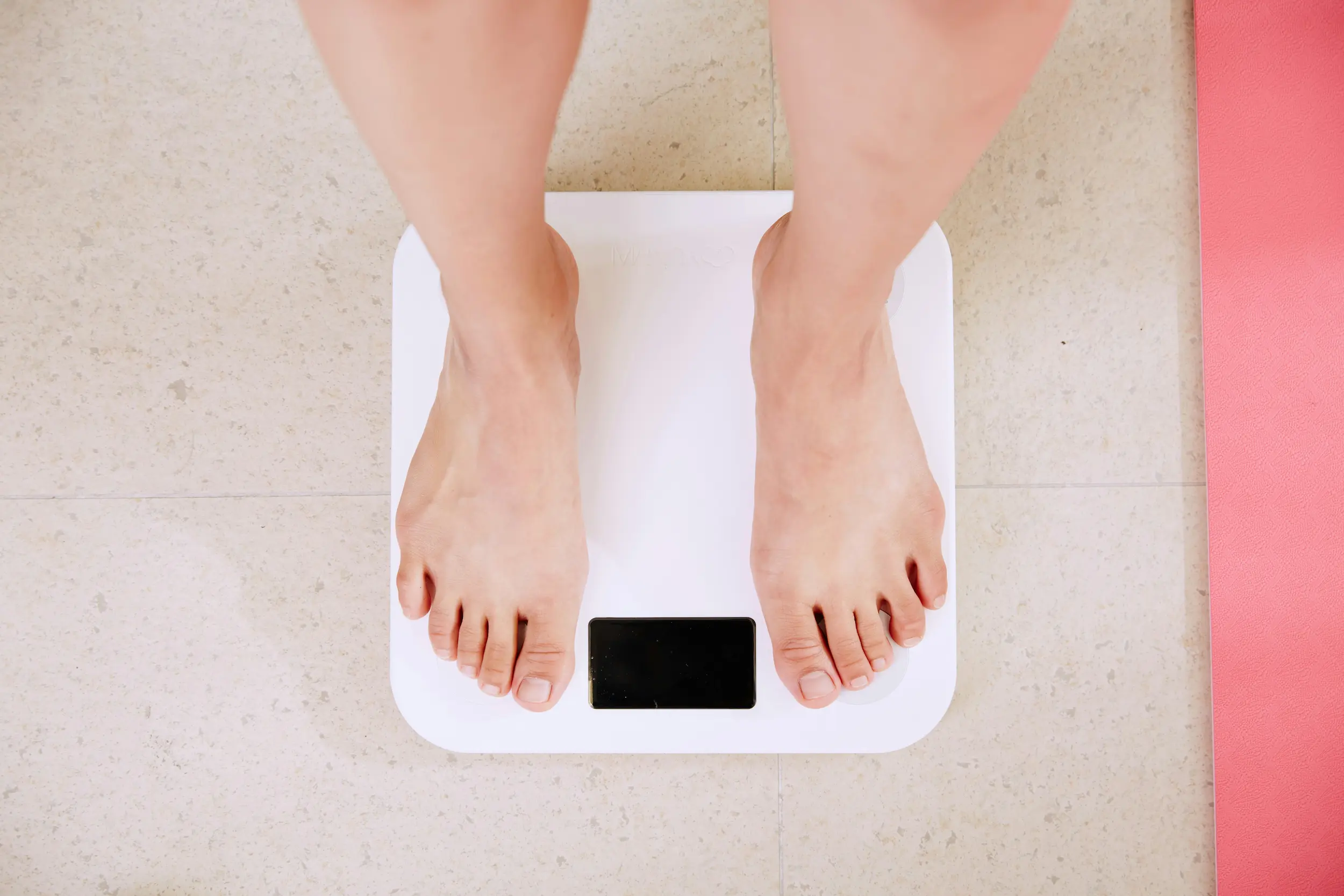
The scale tells you your total weight. It does not tell you what you are losing, what you are preserving, or how your health is actually changing. Understanding body composition — what your body is made of and how it is shifting — gives you a far more accurate and motivating picture of your progress on GLP-1 therapy.
01. Why the Scale Is Incomplete
Your body weight naturally fluctuates throughout the day due to water, food, digestion, hormonal changes, and bowel movements. When weighed at different times of day, weight can vary by several pounds — this is completely normal and has nothing to do with fat gain or loss. When weighed at the same time each day (ideally first thing in the morning), fluctuations are typically much smaller, often less than 1 pound. For women, hormonal shifts during the menstrual cycle can temporarily increase body water by 4 or more pounds.
Weight loss does not happen in a straight line. Weeks where the scale does not move — or even moves slightly up — often coincide with real fat loss that is temporarily masked by fluid retention, particularly after starting or increasing exercise.
💡Relying on the scale alone as your only measure of progress is one of the most common reasons people become discouraged and quit — often right when their body is changing the most.
What the scale cannot tell you:
- Whether you are losing fat or muscle
- Whether visceral fat (the most health-relevant type of fat) is decreasing
- Whether your body composition is improving even when weight stalls
- Whether fluid retention is temporarily masking fat loss
- How your resting metabolic rate is changing
- Whether you are getting physically stronger
Why weight stalls are often misleading:
When you begin or increase resistance exercise, muscles retain water as part of the adaptation and repair process. Research shows this swelling can persist for at least 72 hours after a workout. This can partially or fully offset fat loss on the scale for days to weeks while real body composition improvements are happening.
This is one of the most discouraging — and most misunderstood — experiences in a weight loss journey. The absence of scale movement is not the absence of progress.
02. What Body Composition Actually Means
Body composition describes the proportions of fat mass, lean mass, and water that make up your total body weight. The same person at the same weight can have very different health profiles depending on their body composition.
| Component |
What It Is |
Why It Matters |
| Fat mass |
Stored body fat — both subcutaneous (under the skin) and visceral (around organs |
Excess fat mass, especially visceral fat, drives metabolic disease — diabetes, heart disease, inflammation, and fatty liver. This is the primary target of weight loss therapy. |
| Lean mass / Muscle mass |
Everything that is not fat-Muscle, bone, organs,connective tissue, and water. |
Lean mass supports your metabolism, strength, mobility, and bone health. Preserving lean mass during weight loss is essential for long-term health. |
| Visceral fat |
Fat stored specifically around internal organs — not visible from the outsid |
More strongly linked to metabolic disease than fat under the skin GLP-1 therapy reduces visceral fat as part of overall fat loss. Waist circumference is one practical way to track changes in this area, even when the scale isn't moving. |
| Body water |
Fluid inside and surrounding cells including blood volume — typically 50–60% of total body weight |
Water makes up the majority of your body weight and fluctuates daily. Changes in hydration, exercise, hormones, and diet can shift your scale weight by 2–3 lbs in a single day — sometimes more — which is why day-to-day weight changes rarely reflect true fat loss or gain. |
💡The goal of weight loss is not simply to lose weight — it is to lose fat while preserving muscle. GLP-1 medications support fat loss effectively, but muscle preservation requires two things working together: adequate protein intake and resistance exercise. Without both, a meaningful portion of the weight lost can come from lean tissue.
How much protein? Aim for 1.2-2 grams per kg of body weight daily
03. Muscle vs. Fat: Why the Ratio Matters
Two people can weigh exactly the same and look, feel, and function completely differently based on their muscle-to-fat ratio.
This is not a cosmetic point — it has direct metabolic and health implications. A higher ratio of fat to muscle is independently associated with increased risk of heart disease, diabetes, and metabolic syndrome.
Muscle is your body's largest site for blood sugar regulation and calorie burning at rest. Preserving muscle while losing fat is what shifts your body composition in a healthier direction.
What more muscle gives you:
- A more active metabolism — Muscle burns more calories at rest than fat. Preserving muscle during weight loss helps maintain your resting metabolic rate, making long-term weight maintenance easier.
- Better blood sugar control — Muscle is your body's largest site for absorbing and using blood sugar. More muscle means better insulin sensitivity and lower blood sugar levels.
- Stronger bones — Resistance training and adequate protein help protect bone density, which can decline during weight loss. Research shows resistance exercise specifically reduces bone loss during calorie restriction.
- More strength and easier movement — Everyday activities like climbing stairs, carrying groceries, and getting around become easier when muscle is preserved.
- A better chance of keeping the weight off — People who preserve more muscle during weight loss maintain a higher calorie-burning capacity, which supports long-term success.
What happens when muscle is lost:
- Your metabolism slows — Muscle burns roughly three times more calories at rest than fat. Losing muscle reduces your resting calorie needs, which can make continued weight loss harder and maintenance more challenging.
- You feel more tired and weak — Muscle loss reduces your physical capacity and endurance, even if you are eating enough calories.
- Weight regain becomes more likely — With less muscle, your body needs fewer calories, so returning to old eating habits leads to faster regain.
This is why adequate protein and resistance exercise are the two most important habits during weight loss — not just for appearance, but for long-term metabolic health
- Your metabolism slows down — your body needs fewer calories, which makes it harder and harder to keep weight off
- You feel more tired and weak — even if you are eating enough calories
- Hair thinning — a common sign your body is not getting enough protein during rapid weight loss
- Weight comes back faster — with less muscle, your body burns fewer calories, so going back to old eating habits leads to quicker regain
04. How to Measure Progress More Accurately
The most accurate picture of your progress comes from tracking multiple data points together — not from any single number. Here are the tools available to you, from free to clinical-grade.
Waist circumference — the most important free measurement
Waist circumference is the most useful measurement you can take at home. It reflects deep belly fat around your organs — the kind most closely tied to health problems like diabetes and heart disease.
Your waist often shrinks noticeably before the scale moves much. GLP-1 medications reduce both visceral fat (deep belly fat around organs) and subcutaneous fat (fat under the skin) by similar amounts — so improvements are happening throughout your body, not just in one area.
How to measure:
- Stand relaxed, feet together
- Wrap the tape around your bare abdomen at the top of your hip bones (iliac crest), keeping the tape level and snug
- Breathe out naturally — do not suck in
- Measure to the nearest ¼ inch; record monthly
- Use the same tape, same time of day, same conditions each time
💡This technique follows the NIH/NHLBI recommended method for clinical waist circumference measurement.
Targets associated with lower metabolic risk:
- General population:
- Women: below 35 inches (88 cm)
- Men: below 40 inches (102 cm)
- Asian, South Asian, and South/Central American populations:
- Women: below 31.5 inches (80 cm)
- Men: below 35 inches (90 cm)
Some populations develop metabolic complications — diabetes, heart disease, inflammation — at lower levels of belly fat. This is why the thresholds above differ. If you are unsure which targets apply to you, ask your provider.
A simpler option that works across all backgrounds: divide your waist measurement by your height (using the same unit for both — inches or centimeters, either works). A ratio of 0.5 or higher indicates increased metabolic risk regardless of ethnicity or sex.
Even if you have not reached these targets, movement in the right direction reflects meaningful health improvement.
Other body measurements worth tracking monthly
- Hips — at the widest point of the buttocks
- Chest — around the fullest part
- Upper arms — at the midpoint between shoulder and elbow, relaxed
- Thighs — at the midpoint between hip and knee
💡Changes in these measurements often precede or exceed scale changes — especially early in GLP-1 therapy when fat loss may not yet be reflected in total weight. Track measurements on a simple spreadsheet or notes app. The specific numbers matter less than the direction of change over 3–6 months.
Body fat percentage measurement tools
| Method |
Access & Cost |
Accuracy |
What It Gives You |
| DEXA scan |
Medical or fitness centers; ~$50–150 per scan |
Gold standard |
Measures fat mass, lean mass, and bone density with high precision. The most informative single assessment available.
Cannot directly differentiate visceral from subcutaneous fat (this is estimated via software algorithm). Very low radiation — comparable to a dental X-ray. |
| InBody / Clinical BIA (Bioelectrical Impedance Analysis) |
Some clinics and gym |
Good for tracking trends; not precise for individual snapshots |
Reasonable accuracy for tracking changes over time. Results are significantly affected by hydration, food intake, exercise, and menstrual cycle — always test under the same conditions (same time of day, fasting, well-hydrated, no recent exercise). The readings are very consistent when conditions are controlled, but any single reading can be off by 3–6% body fat compared to DEXA. |
| Smart scale (home BIA) |
Widely available; ~$30–150 |
Useful for directional trends |
The body fat number shown may not be exact — home scales can be off by several percentage points compared to clinical-grade tools. But the readings are consistent, so tracking the trend over months is still valuable. Focus on monthly direction, not day-to-day numbers. |
| Tape measure (circumference) |
Inexpensive— requires only a flexible tape measure |
Highly practical; clinically validated |
Waist circumference is the single most clinically meaningful at-home measurement. Directly reflects visceral fat changes and is endorsed by multiple guidelines as a screening tool for metabolic risk |
💡Smart scales may not give you a perfectly exact number, but that is okay. What matters is the trend. If measured under the same conditions each time, (same time of day, before eating, well hydrated) a change of 2–3 percentage points over several months reflects a real shift in your body composition — even if the starting number was not perfectly precise.
Progress photos and clothing fit
Progress photos:
- Monthly photos taken in consistent lighting, clothing, and position are among the most motivating tracking tools available. Changes that are invisible week to week become dramatic over 3–6 months.
- Take front, side, and back photos. Keep them private. Compare monthly, not weekly.
How clothes fit:
- Take front, side, and back photos. Keep them private. Compare monthly, not weekly.
- Keep one reference item, like a pair of jeans or a fitted waistband and try it on monthly
Resting heart rate and blood pressure
- Weight loss generally lowers resting heart rate — however, GLP-1 medications themselves can raise heart rate by 2–4 beats per minute as a known medication effect.
- This means your heart rate may not drop as expected, or may even increase slightly, despite real cardiovascular improvement.
- Most adults have a resting heart rate between 60 and 80 bpm. The normal range extends from 50 to 90 bpm.
- What matters most is the trend over time and how it relates to your overall fitness.
- Track using a fitness watch, blood pressure cuff, or phone app
- Measure at the same time each day — ideally morning, before activity
- Report any sustained resting heart rate above 100 bpm or new palpitations to your care team
- Normal blood pressure is below 120/80 mmHg. Blood pressure typically improves with weight loss — often before medications need to be adjusted. Losing just 5–10% of your body weight can lower blood pressure by several points
- For someone with elevated blood pressure, improving toward or below 130/80 mmHg reflects meaningful cardiovascular risk reduction
- If you are on blood pressure medications, contact your clinical provider when you notice consistent readings below your usual baseline — dose reduction may be appropriate
05. Non-Scale Victories — Track These
The most meaningful health changes from GLP-1 therapy often do not appear on a scale. These non-scale victories reflect real improvements in your metabolic health, physical function, and quality of life — and they matter as much as any number.
| Category |
Example 1 |
Example 2 |
Example 3 |
| Energy |
Fewer afternoon energy crashes |
Waking more rested |
More stamina through the day |
| Mobility |
Less joint pain |
Easier to climb stairs |
Increased range of motion |
| Lab values |
Lower HbA1c |
Improved cholesterol |
Improved liver enzymes |
| Medications |
Reduced blood pressure med doses |
Reduced diabetes med doses |
Reduced cholesterol med doses |
| Sleep |
Improved sleep quality |
Reduced snoring |
Improvement in sleep apnea symptoms |
| Mood |
Improved confidence |
Better mental health-related quality of life |
Better relationship with food |
| Clothing |
Dropping a size |
Clothing fitting more comfortably |
Noticing fit changes in areas like waist and hips |
| Physical milestones |
Walking further or faster |
New exercises possible |
Playing with kids or grandkids more easily |
💡Non-scale victories are not consolation prizes — they are the actual goals. Better labs, more energy, less pain, improved function, and a longer, healthier life are the reasons treatment matters. Tracking those outcomes directly is the clearest way to see if your treatment plan is working.
06. A Note on Weighing Yourself
Weigh yourself at whatever frequency works best for you. For some people, daily weighing helps them stay on track. For others, it causes stress and frustration. Both responses are normal — pick the approach that gives you useful information without adding stress.
Best practices for weighing:
- Always weigh at the same time of day — morning, after using the bathroom, before eating or drinking
- Use the same scale on the same surface — scale readings vary between devices and surfaces
- If weighing daily, focus on the 7-day rolling average, not any single reading
- Minimum monthly tracking is needed for your care team to monitor your progress accurately
💡 A single reading that goes up 2 lbs overnight is almost always water. It is not a reason to change your plan.
When to step back from the scale:
- Weighing yourself causes significant anxiety leading to impulsive eating decisions, or dominates your mood
💡If any of these apply, switch to monthly measurements only and focus on non-scale progress indicators. Let your care team know.
Contact Your Care Team If:
- You are losing weight faster than expected — as a general guide, weight loss greater than 2 lbs per week consistently or more than 5% of your body weight in a single month warrants a check-in with your care team
- You suspect you are losing muscle — signs include increasing weakness, fatigue out of proportion to your calorie intake, or difficulty with activities that used to feel easy
- You are experiencing noticeable hair thinning or shedding — this is common during rapid weight loss and may be worsened by low protein, iron, or zinc levels. Your care team can check labs and adjust your plan
- Weighing yourself is causing significant distress — if it leads to anxiety, obsessive thinking, or impulsive eating decisions, your care team can help you find a healthier monitoring approach
Progress is happening even when the scale is not moving.
Tracking waist circumference, non-scale victories, and paying attention to how you feel and function gives you a far more accurate and motivating account of what your body is doing.
💡Questions? Connect with your Onsera care team through the app.
This guide is for educational purposes only. It does not take the place of personalized medical advice from your health care provider. Always consult your Onsera care team before making any changes to your medication or treatment plan